 Traverly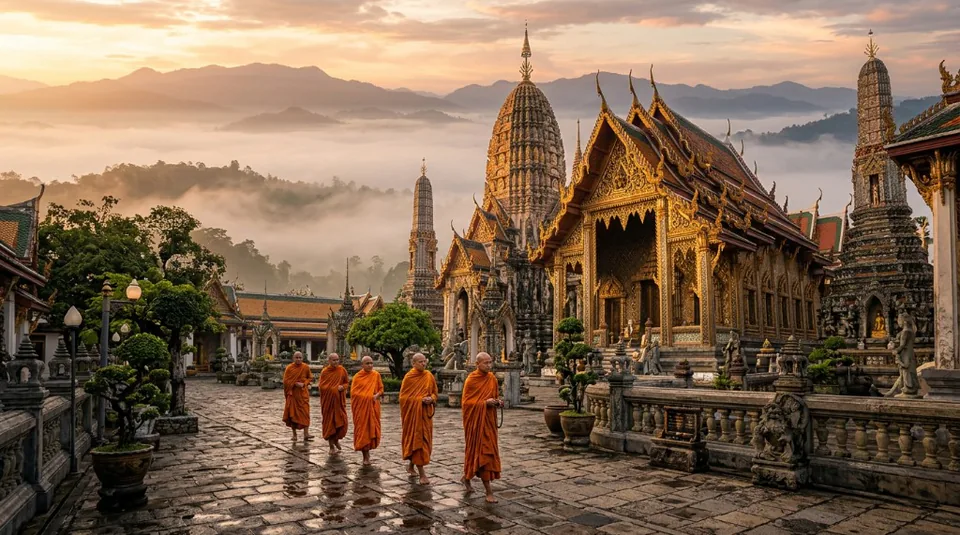
This ranked list is an editorial selection for travel inspiration, not an objective or universal measure. Asia is a continent defined by its deep spiritual roots and staggering architectural diversity. For millennia, its civilizations have poured their wealth, creativity, and faith into the construction of temples that are meant to serve as mirrors of the divine. These sacred structures are more than just places of worship; they are repositories of history, art, and philosophy, standing as testaments to the ingenuity of the human spirit. Walking through a temple in Asia is a multi-sensory experience—the smell of incense, the sound of rhythmic chanting, and the sight of intricate carvings that tell stories older than the stones themselves.
From the high-altitude monasteries of the Himalayas to the tropical jungle sanctuaries of Southeast Asia, these "famous places" offer a unique window into the cultures that built them. In this guide, we explore the top 10 most iconic temples across Asia. Each one is a masterpiece of design, whether it’s a towering golden pagoda, a minimalist Zen sanctuary, or a massive stone complex reclaimed by nature. These are the destinations that invite contemplation and awe, reminding us of the enduring power of faith and the beauty of human devotion.
1. Wat Arun, Bangkok, Thailand
Known as the "Temple of Dawn," Wat Arun is one of Bangkok’s most iconic landmarks, rising majestically from the banks of the Chao Phraya River. Its most striking feature is the central *prang* (spire), which is over 70 meters tall and decorated with intricate patterns using colorful porcelain and seashells. While its name suggests a sunrise visit, Wat Arun is equally stunning at sunset when the light catches the porcelain and the spire glows with a golden hue. Watching the resident monks in their vibrant orange robes move through the grounds as the sun dips below the horizon is a quintessentially Thai experience that captures the serene energy of Buddhist life.
2. Kiyomizu-dera, Kyoto, Japan
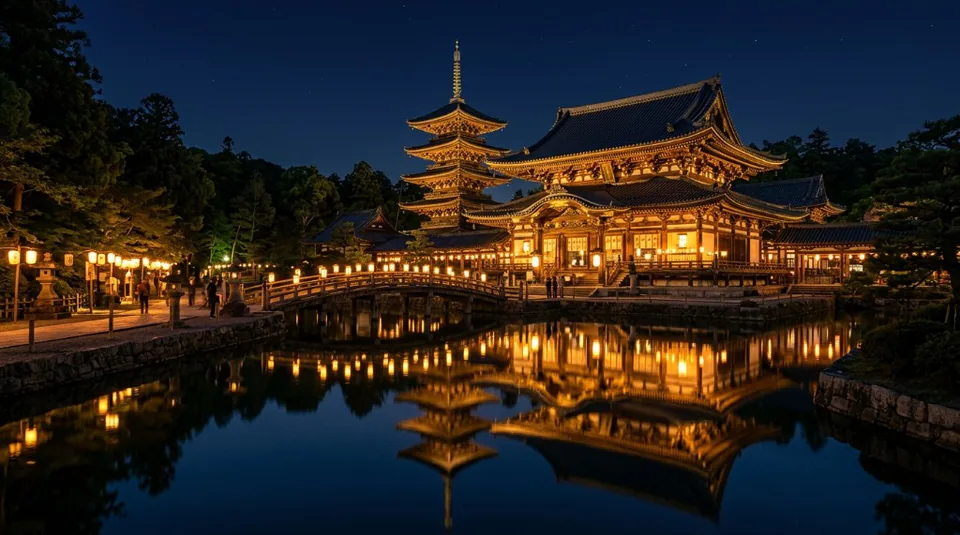
Perched on the side of Mount Otowa, Kiyomizu-dera is one of Japan's most celebrated temples. Founded in 778, the current structures date back to the 1630s. The temple is famous for its massive wooden stage, built without the use of a single nail, which offers spectacular views of Kyoto and the cherry blossoms or maple leaves depending on the season. At night, during special illumination events, the temple is transformed into a magical realm of light and shadow, with the pagoda and main hall reflected in the calm waters of the temple's ponds. Drinking from the Otowa Waterfall on the grounds is said to bring longevity, success at school, or a fortunate love life.
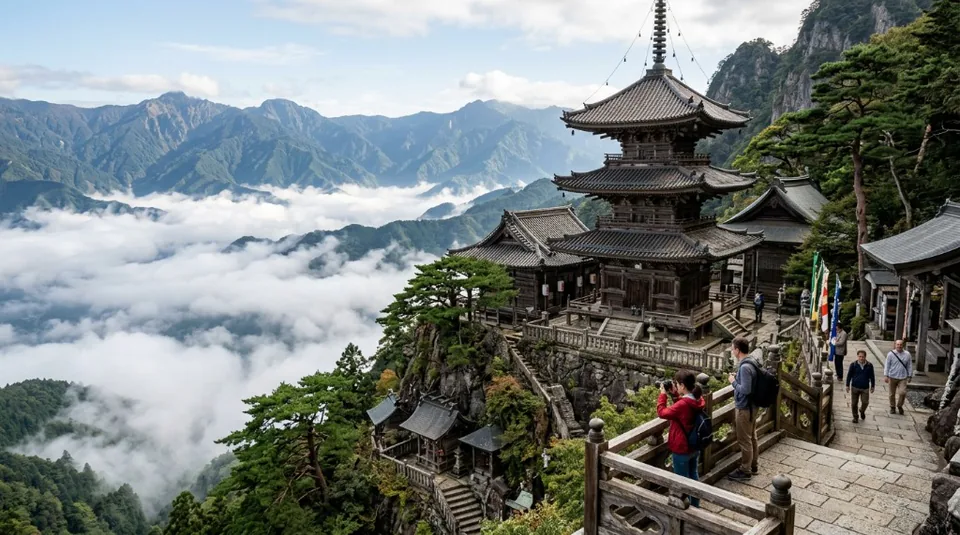
3. Seiganto-ji, Wakayama, Japan
For a view that looks like it belongs in an ancient ink wash painting, head to Seiganto-ji in the Wakayama Prefecture. This Buddhist temple is part of the Kumano Sanzan world heritage site and is situated right next to Nachi Falls, the tallest waterfall in Japan. The red, three-story pagoda of the temple set against the backdrop of the thundering 133-meter waterfall and the misty, primeval forests of the Kii Mountains is one of the most photographed scenes in the country. It is a place where Shinto and Buddhist traditions have coexisted for centuries, emphasizing a deep spiritual connection to the raw power of the natural world.
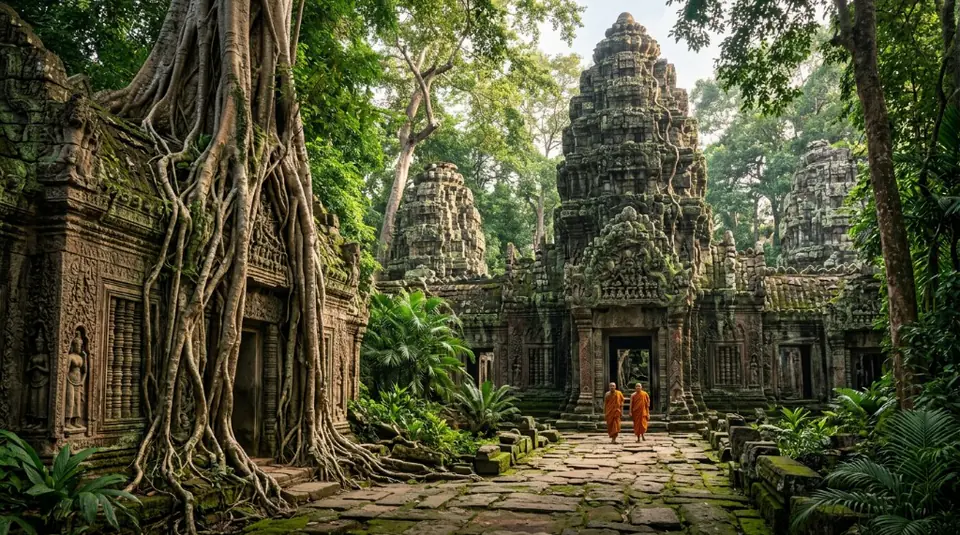
4. Angkor Wat, Siem Reap, Cambodia
Angkor Wat is the largest religious monument in the world and the pinnacle of Khmer architecture. While the main temple of Angkor Wat is a masterpiece of symmetry and scale, the nearby Ta Prohm temple offers a more visceral connection to history. Ta Prohm has been left largely as it was found: swallowed by the jungle. Massive silk-cotton and strangler fig trees have grown over and through the stone structures, their roots squeezing the carvings like giant octopus tentacles. It is a hauntingly beautiful reminder of the cycle of time and the power of nature to reclaim even the most grand human achievements. Walking through its corridors feels like stepping into a lost world.
5. Borobudur, Central Java, Indonesia
Borobudur is the world's largest Buddhist temple and a UNESCO World Heritage site. Built in the 9th century, this massive stone mandala consists of nine stacked platforms decorated with over 2,600 relief panels and 504 Buddha statues. The top platform features 72 openwork stupas, each containing a Buddha statue, surrounding a large central stupa. The best time to visit is at dawn, as the sun rises over the surrounding volcanoes, casting a golden light over the statues and the misty valley below. Borobudur was lost to the world for centuries, buried under volcanic ash and jungle, until its rediscovery in the 19th century, making it one of the most significant archaeological finds in history.
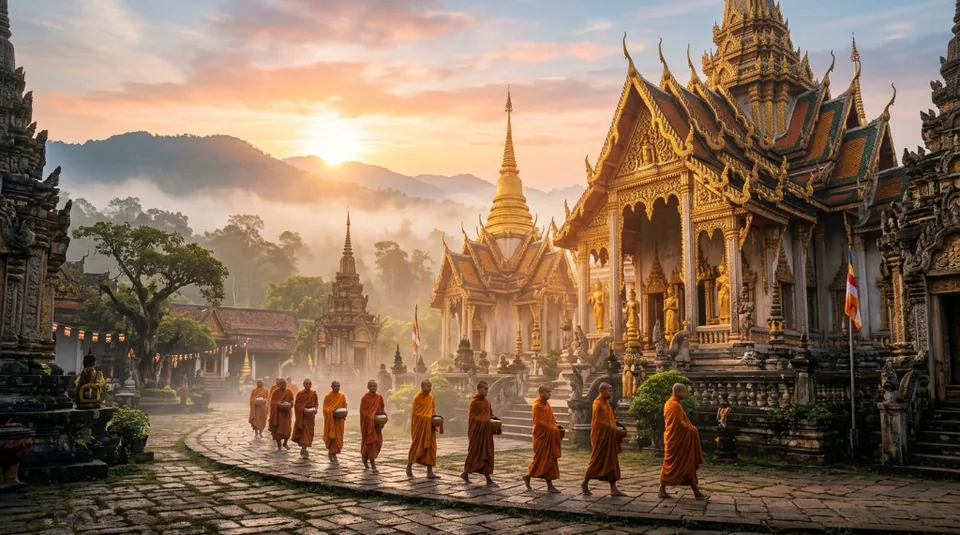
6. Shwedagon Pagoda, Yangon, Myanmar
Standing nearly 100 meters tall, the Shwedagon Pagoda is the most sacred Buddhist pagoda in Myanmar. It is covered in hundreds of gold plates and its top is encrusted with over 4,500 diamonds—the largest being a 72-carat diamond. The pagoda is said to contain relics of four previous Buddhas. At sunrise or sunset, the massive golden spire glows with an intensity that is impossible to capture in photos. The atmosphere is one of profound devotion, as locals glide across the marble floors, offering prayers and pouring water over the statues of their zodiac signs. It is a living, breathing center of spiritual life and national identity for the Burmese people.
7. Temple of Heaven, Beijing, China
Built during the Ming Dynasty, the Temple of Heaven is a masterpiece of architectural and landscape design. It was where the Emperors of the Ming and Qing dynasties performed annual rites for a good harvest. The most famous structure is the "Hall of Prayer for Good Harvests," a magnificent triple-gabled circular building made entirely of wood without using any nails. The layout of the complex reflects ancient Chinese beliefs about the relationship between earth and heaven. The surrounding park is a vibrant community hub where locals gather to practice Tai Chi, play chess, and perform traditional music, blending imperial grandeur with the daily life of modern Beijing.
8. Lotus Temple, New Delhi, India
The Lotus Temple is a Bahá'í House of Worship known for its flowerlike shape. Composed of 27 free-standing marble-clad "petals" arranged in clusters of three to form nine sides, it is an architectural marvel of modern engineering. Since its completion in 1986, it has become one of the most visited buildings in the world. The temple is open to people of all faiths, providing a silent space for meditation and prayer. Surrounded by nine ponds and lush gardens, the white marble structure seems to float like a lotus flower on water. It is a symbol of peace, purity, and the unity of all religions, standing in contrast to the frenetic energy of the surrounding Indian capital.
9. Boudhanath Stupa, Kathmandu, Nepal
Dominating the skyline of Kathmandu, the Boudhanath Stupa is one of the largest and most significant Buddhist stupas in the world. Its massive white dome is topped by a golden spire painted with the watchful eyes of the Buddha, looking out in all four directions. The stupa is the center of Tibetan Buddhism in Nepal, and its base is surrounded by hundreds of prayer wheels and shops selling incense and singing bowls. Pilgrims perform "kora" (circumambulation), walking clockwise around the stupa while chanting mantras. The fluttering multicolored prayer flags against the blue Himalayan sky create a scene of incredible spiritual beauty and cultural vibrancy.
10. Golden Temple (Harmandir Sahib), Amritsar, India
The Golden Temple is the holiest shrine of Sikhism and a place of unparalleled beauty and hospitality. Rebuilt in gold and marble in the 19th century, the temple sits in the middle of a large sarovar (sacred pool) whose waters are thought to have healing powers. The temple is famous for its *langar*, a community kitchen that serves free meals to over 100,000 people every single day, regardless of their race, religion, or background. Seeing the golden structure reflected in the shimmering water at night, accompanied by the continuous chanting from the Guru Granth Sahib, is a deeply moving experience that embodies the Sikh principles of equality, service, and devotion.
Sources and travel checks
Conditions, access, prices, schedules and safety guidance can change. Confirm current details with the linked authorities before travelling; for immediate risks, follow local officials, posted warnings and official advisories.
- UNESCO World Heritage Centre — World Heritage ListChecked 2026-10-13 · Authoritative listing and status of World Heritage properties.
These links document the references reviewed; they do not imply endorsement of Traverly.