 Traverly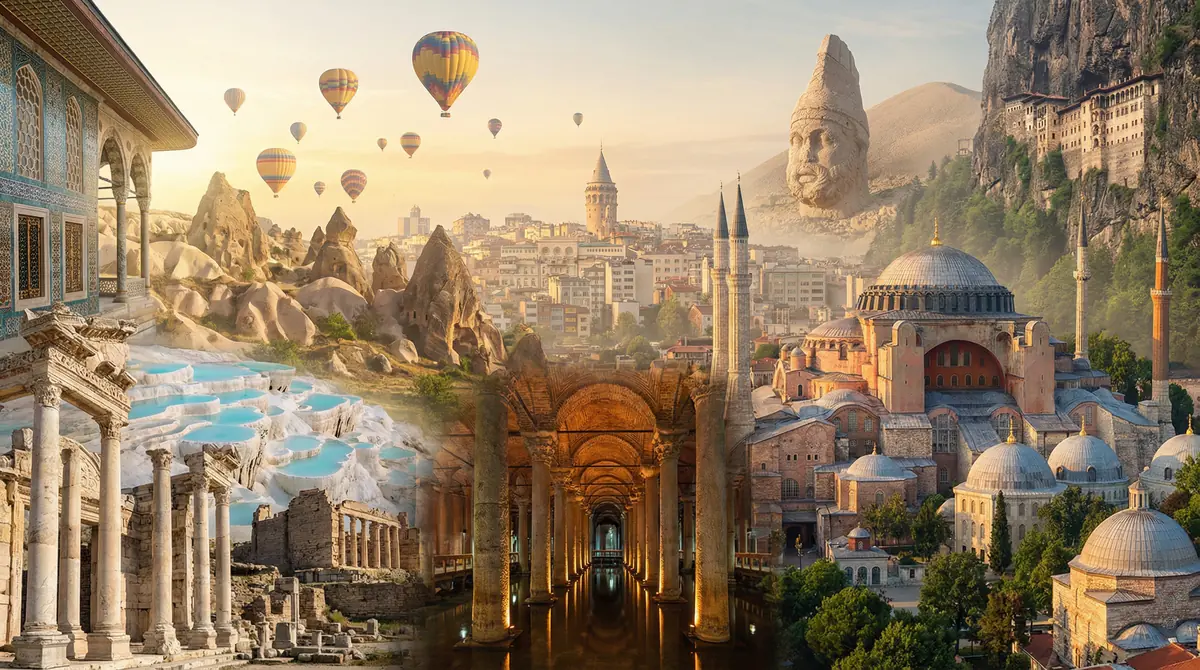
This ranked list is an editorial selection for travel inspiration, not an objective or universal measure. Turkey is a country where history, culture, and natural beauty converge, making it a treasure trove of landmarks that span centuries of civilization. From ancient ruins and grand mosques to palaces, thermal terraces, and monumental statues, the country’s landmarks reflect the rich heritage of empires such as the Byzantine, Ottoman, and Hittite civilizations. Each landmark tells a story of architectural mastery, cultural significance, and historical evolution, offering visitors a glimpse into the country’s complex and fascinating past.
Visitors to Turkey can experience the iconic skyline of Istanbul with its magnificent mosques and palaces, explore ancient cities that have stood the test of time, and witness natural wonders intertwined with human ingenuity, such as Pamukkale’s sparkling terraces and Cappadocia’s surreal rock formations. The diversity of Turkey’s landmarks—from bustling urban centers to remote mountain monasteries—ensures that every traveler finds something memorable.
This guide highlights the top 10 landmarks in Turkey, providing insight into the architectural, historical, and cultural significance of each location. Whether it’s exploring the grandeur of Hagia Sophia, wandering among ancient ruins in Ephesus, or marveling at the unique landscapes of Cappadocia, visitors will be immersed in a journey that spans both time and geography. These landmarks capture the essence of Turkey, making it a must-visit destination for history enthusiasts, culture lovers, and adventure seekers alike.
1. Hagia Sophia – Istanbul
Hagia Sophia is one of the most iconic landmarks in Turkey and a symbol of the country’s rich history. Originally constructed as a cathedral in the 6th century, it later became a mosque and is now a museum that attracts millions of visitors each year. The massive dome, intricate mosaics, and striking architecture showcase the genius of Byzantine design. Visitors can explore its grand interior, observe the blend of Christian and Islamic elements, and gain insight into Istanbul’s historical transformation as a crossroads of civilizations. The surrounding Sultanahmet area adds to the experience, with nearby museums, historic streets, and bustling markets. Hagia Sophia’s architectural and cultural significance makes it a must-see landmark that embodies centuries of Turkish history.
2. Blue Mosque (Sultan Ahmed Mosque) – Istanbul
The Blue Mosque, known for its stunning blue İznik tiles and six elegant minarets, is an architectural masterpiece of the Ottoman era. Built in the early 17th century, it continues to serve as a place of worship while welcoming tourists from around the world. Visitors can admire the grand prayer hall, intricate calligraphy, and courtyard design, and experience the mosque’s serene and spiritual atmosphere. The mosque’s proximity to Hagia Sophia allows travelers to witness the contrasting architectural styles of Byzantine and Ottoman periods in one visit. Its cultural and religious importance, combined with breathtaking design, makes the Blue Mosque an essential landmark in Turkey.
3. Topkapi Palace – Istanbul
Topkapi Palace served as the main residence of Ottoman sultans for centuries and is now a museum showcasing imperial treasures, historic artifacts, and opulent architecture. Visitors can wander through the palace’s courtyards, gardens, and ceremonial halls, exploring displays of jewelry, manuscripts, and sacred relics. The Harem section provides a glimpse into the private lives of the sultans and their families. With panoramic views of the Bosphorus, Topkapi Palace combines historical insight with scenic beauty, making it a highlight for anyone exploring Istanbul’s rich heritage.
4. Cappadocia – Central Anatolia
Cappadocia is renowned for its otherworldly landscape of fairy chimneys, volcanic rock formations, and ancient cave dwellings. Adventure seekers can explore underground cities, hike scenic valleys, and experience hot air balloon rides at sunrise for panoramic views of the surreal terrain. The region’s combination of natural beauty and historical significance, with churches and monasteries carved into the rocks, creates a truly unique and unforgettable experience. Cappadocia is both a visual and cultural wonder, attracting travelers who seek both adventure and history.
5. Ephesus – Izmir Province
Ephesus is an ancient city that once served as a major port and commercial center of the Roman Empire. Visitors can wander through well-preserved streets, marvel at the Library of Celsus, explore the Grand Theatre, and view intricate mosaics and statues. Walking among the ruins offers a tangible connection to history, allowing travelers to imagine the city’s former grandeur. Ephesus remains one of the most important archaeological sites in Turkey, providing insights into Roman architecture, urban planning, and cultural life.
6. Pamukkale – Denizli Province
Pamukkale, also known as the “Cotton Castle,” features stunning white travertine terraces formed by mineral-rich thermal waters. Visitors can walk along the terraces, bathe in warm pools, and admire the unique geological formations. The nearby ancient city of Hierapolis offers historical context, with Roman theaters, necropolises, and sacred sites complementing the natural beauty. Pamukkale’s combination of geological wonder and historical significance makes it a remarkable landmark for nature lovers and history enthusiasts alike.
7. Mount Nemrut – Adiyaman Province
Mount Nemrut is famous for its colossal statues and ancient burial tumulus atop a mountain peak. Visitors can hike to the summit to witness sunrise or sunset over the monumental heads and terraces, offering dramatic panoramic views of the surrounding landscape. The site holds archaeological and cultural importance, reflecting the kingdom of Commagene and its fusion of Hellenistic and Persian influences. Mount Nemrut is both a scenic and historical marvel, attracting travelers interested in adventure and ancient history.
8. Galata Tower – Istanbul
Galata Tower is a medieval stone tower offering sweeping views of Istanbul’s skyline, Bosphorus, and historic districts. Visitors can climb to the observation deck, learn about the tower’s role in defense and trade, and enjoy panoramic photography opportunities. The surrounding Galata district, with its streets, cafes, and boutiques, provides a lively urban experience alongside the tower’s historic significance.
9. Basilica Cistern – Istanbul
The Basilica Cistern is an ancient underground water reservoir built during the Byzantine period. With its atmospheric lighting, rows of columns, and reflective water pools, the cistern provides a mysterious and awe-inspiring experience. Visitors can explore the vast chamber, learn about the engineering marvel, and appreciate the blending of functional architecture with aesthetic design. Its unique ambiance makes it a memorable landmark in Istanbul.
10. Troy – Canakkale Province
Troy is the legendary ancient city immortalized in Homer’s Iliad. Visitors can explore the archaeological site, view reconstructed city walls, and imagine the historic battles and myths that shaped its legacy. The site provides cultural, historical, and literary significance, allowing travelers to connect with one of the world’s most famous ancient civilizations.
Sources and travel checks
Conditions, access, prices, schedules and safety guidance can change. Confirm current details with the linked authorities before travelling; for immediate risks, follow local officials, posted warnings and official advisories.
- GoTürkiye — Official travel guide of TürkiyeChecked 2026-10-13 · Official destination context for landmarks in Türkiye.
- UNESCO World Heritage Centre — World Heritage ListChecked 2026-10-13 · Authoritative listing and status of World Heritage properties.
These links document the references reviewed; they do not imply endorsement of Traverly.