 Traverly
This ranked list is an editorial selection for travel inspiration, not an objective or universal measure. There are very few experiences in the world that can overwhelm and delight the senses quite like stepping into a traditional Moroccan souk. For centuries, these incredibly intricately woven labyrinthine marketplaces have served as the beating commercial and social heart of the country's ancient medinas. Far more than just places to buy and sell goods, traditional Moroccan markets are a chaotic, vibrant, and deeply immersive plunge into the nation's rich history, profound artistry, and enduring trading culture. Here, the air is thick with the intoxicating aromas of ground cumin, saffron, and freshly brewed mint tea, while the visual spectrum is completely dominated by hanging colorful carpets, brilliant ceramics, and glistening brass lanterns.
Navigating these winding, impossibly narrow alleyways requires a healthy dose of patience and a willingness to embrace getting thoroughly lost. Haggling is not just expected; it is a respected social art form that often involves lengthy conversations over sweet tea. Whether you are searching for authentic Berber rugs, hand-tooled leather goods, or simply the thrill of experiencing medieval commerce in the modern age, the souks are unforgettable. Here is our comprehensive guide to the top 10 traditional markets you absolutely must explore when visiting Morocco.
1. Jemaa el-Fnaa (Marrakech)
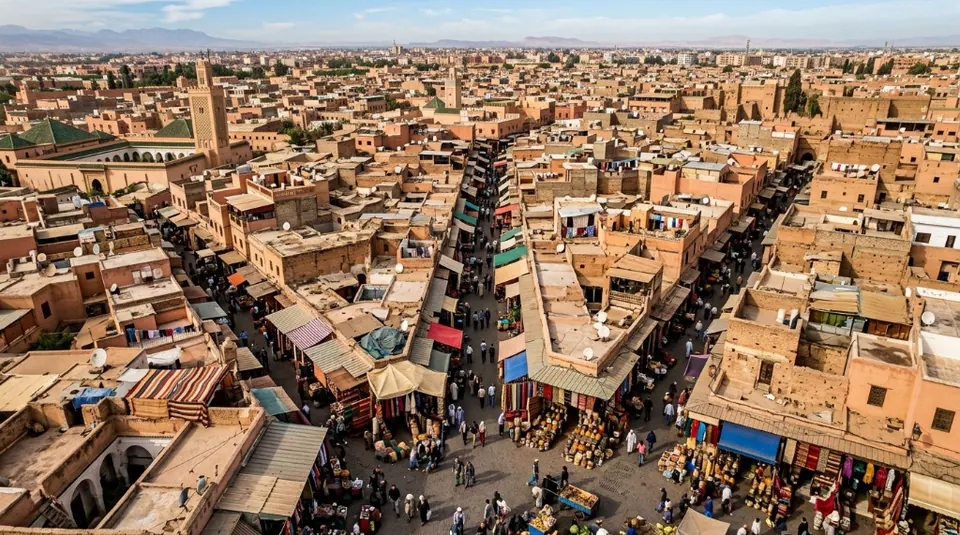
A central gathering place in Marrakech, Jemaa el-Fnaa is arguably the most famous public square and market in the entire African continent. While daytime sees the square filled with fresh orange juice vendors, water sellers in fringed hats, and unfortunately, controversial snake charmers, the magic truly happens at dusk. As the sun sets, the vast plaza completely transforms into an enormous, open-air dining spectacle. Over a hundred food stalls are rapidly assembled, grilling fierce merguez sausages, whole sheep heads, and sizzling kebabs in thick clouds of aromatic smoke. Beyond the food, the square becomes a theater for traditional Berber musicians, mesmerizing storytellers, and acrobats, offering a visceral, electric atmosphere that has remained fundamentally unchanged for centuries.
2. Souk Semmarine (Marrakech)
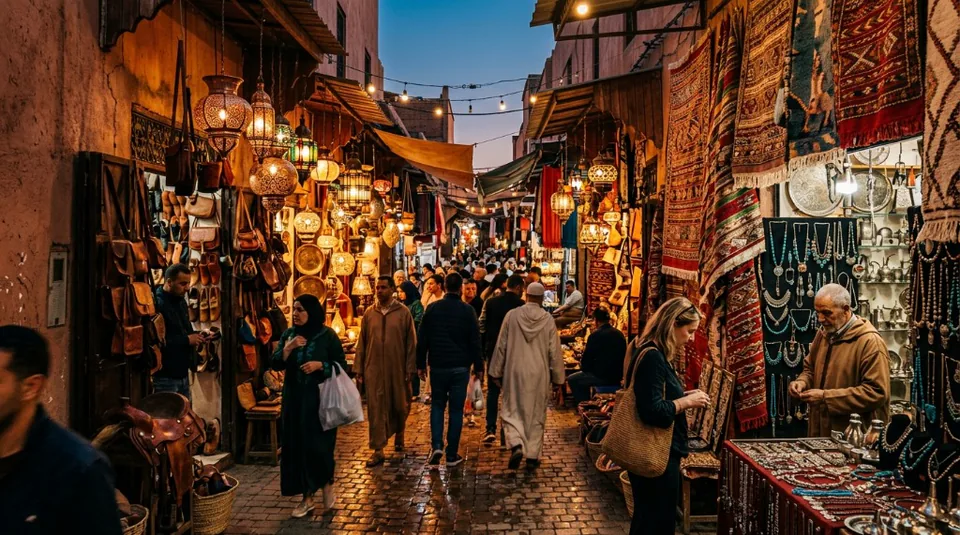
Extending directly north from Jemaa el-Fnaa, Souk Semmarine is the massive, covered artery that serves as the main entrance into the impossibly complex Marrakech medina. Originally dedicated exclusively to leather goods, this wide, iron-roofed avenue is now a dazzling, intensely colorful introduction to the full spectrum of Moroccan artisanship. The shops here are overwhelmingly packed with glittering, intricately detailed brass lanterns, towering piles of brightly dyed babouches (traditional leather slippers), and impossibly plush Berber carpets. Because this is the primary tourist thoroughfare, the vendors here are notoriously persuasive and the prices often start astronomically high, making it the absolute perfect place to boldly practice your finest haggling and negotiation skills.
3. The Medina of Fez (Fez el Bali)
While Marrakech is famously chaotic, the UNESCO-listed medieval Medina of Fez, known as Fez el Bali, is utterly ancient and mysteriously profound. Consisting of an unbelievable network of over 9,000 completely car-free, maze-like alleyways, it is widely considered the largest urban pedestrian zone on Earth. The markets here are strictly organized by guild, exactly as they were in the 9th century. You will find distinct, dedicated quarters heavily specializing in distinct crafts—from massive wedding thrones and heavy wooden furniture to intricate copperware. Navigating Fez el Bali is notoriously difficult and hiring an official local guide is highly recommended unless you completely welcome the possibility of becoming disoriented among the heavily laden donkeys.
4. Place Seffarine (Fez)
Nestled deeply within the heart of Fez el Bali is Place Seffarine, a small, heavily shadowed square that visually and acoustically assaults the senses. This is the historic epicenter of the city’s ancient coppersmiths. Long before you actually see the square, you will hear the rhythmic, deafening clanging of hundreds of heavy hammers striking metal. Artisans sit cross-legged in incredibly tiny workshops, aggressively beating and meticulously shaping sheets of copper and brass into massive legendary cooking pots, enormous ornate tea trays, and beautiful censers. Purchasing a handcrafted item directly from the incredibly skilled artisan who just physically hammered it into existence right before your eyes is a profoundly authentic and rewarding experience.
5. Souk des Teinturiers (The Dyers’ Souk, Marrakech)
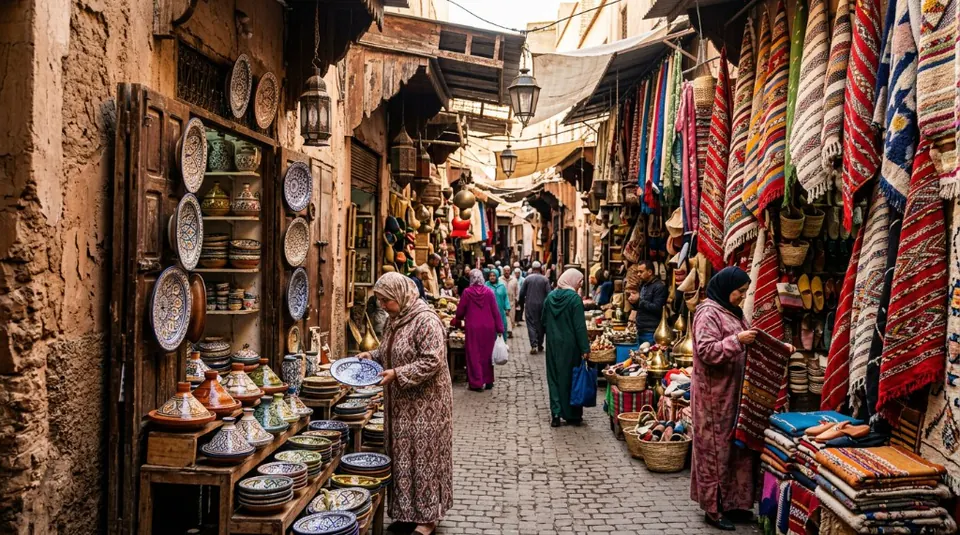
For photographers seeking the iconic, vibrantly colorful Moroccan aesthetic, the Souk des Teinturiers is an absolute visual masterpiece. Located deep within the Marrakech medina, this relatively small, highly atmospheric market is where raw wool and delicate silk are traditionally dyed. The incredible visual hallmark of this specific souk is the towering, dripping skeins of freshly dyed yarn hung dangerously high across the narrow alleyways to desperately dry in the scorching sun. The vibrant, bleeding shades of indigo blue, saffron yellow, and poppy red create an impossibly photogenic canopy against the dark earthen walls. The intense, pungent smells of the raw dyes and the chaotic atmosphere make it deeply memorable.
6. Souk el Henna (Fez)
If the aggressive clanging of the copper smiths and the chaotic rush of the main tourist arteries prove overwhelmingly taxing, quietly seeking out Souk el Henna in Fez provides immense relief. This heavily shaded, beautifully tranquil market square is built around a massive, ancient plane tree and historic hospitals. As the name explicitly suggests, it specializes profoundly in highly quality henna, but it is also the definitive source for traditional Moroccan cosmetics, dark kohl eyeliner, pure organic rose water, black soap, and ghassoul (traditional washing clay). The vendors here are remarkably calmer, allowing you to peacefully explore the towering pyramids of natural skincare products without severe pressure.
7. Chefchaouen Medina Market
Tucked beautifully in the dramatic Rif Mountains, Chefchaouen is world-famous as the 'Blue Pearl' because almost every single building in its historic medina is painted in brilliant, mesmerizing shades of azure and cobalt. Unsurprisingly, its markets follow this deeply relaxed, artistic mountainous vibe. While significantly smaller and thankfully less aggressive than the massive souks of Fez or Marrakech, Chefchaouen’s markets are uniquely renowned for specialized local goods not easily found elsewhere. This includes incredibly cozy, brightly woven heavy wool garments, raw goat cheese, and high-quality local mountain honey. Shopping aggressively contrasting colorful woven baskets against the flawlessly blue walls is visually stunning.
8. The Souks of Essaouira
Facing the harsh, windy Atlantic Ocean, the fortified coastal city of Essaouira offers a completely different, noticeably breezier market experience. Protected by massive 18th-century stone ramparts, the deeply charming, whitewashed medina features extremely wide, grid-like streets that make navigation blessedly easy. The Essaouira souks are globally renowned for exquisite woodwork, specifically the exceptionally fragrant thuya wood, which local master artisans carve and heavily polish into incredibly intricate magical puzzle boxes and beautiful furniture. Furthermore, the bustling local fish market located directly by the screaming gulls in the active port allows you to personally select freshly caught sardines and instantly have them grilled on the spot.
9. Central Market (Casablanca)
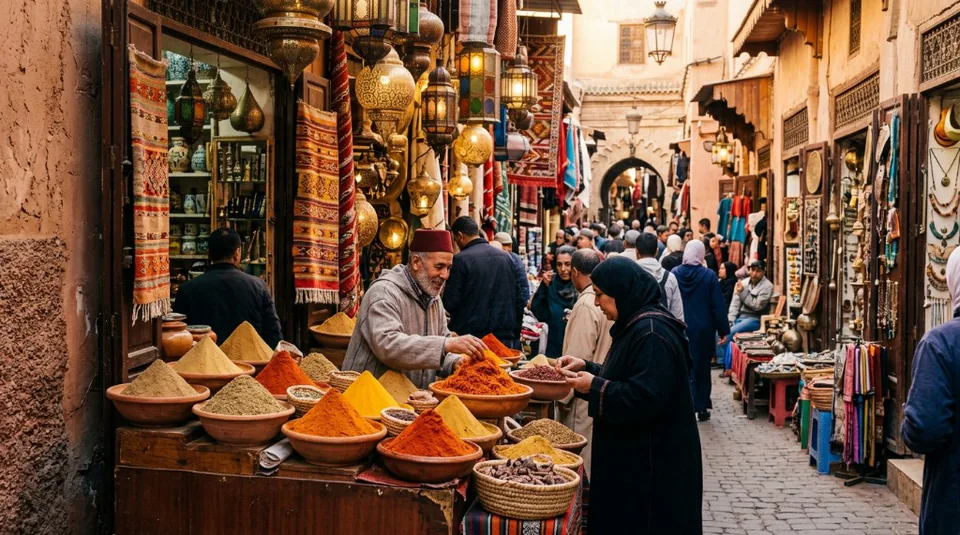
While the heavily industrial metropolis of Casablanca lacks the incredibly ancient medieval charm of the historic imperial cities, its phenomenal *Marché Central* provides an incredibly authentic glimpse into daily, modern urban Moroccan life. Located directly on the bustling Boulevard Muhammad V, this vast, heavily walled market is where wealthy locals fiercely bargain for their daily groceries. The seafood section is the undeniable star here, boasting massive swordfish, giant Atlantic crabs, and towering piles of fresh oysters. The market also features vibrant flowers, incredible mountains of dates, and aggressive butchers. Visitors can routinely purchase raw fish directly from a screaming vendor and take it to the tiny surrounding cafes to be expertly fried perfectly for lunch.
10. Taroudant Souks
Often lovingly referred to as "Little Marrakech" due to its massive, heavily fortified red mud walls, the southern agricultural hub of Taroudant boasts markets that are remarkably authentic and wildly unbothered by heavy tourism. Located violently in the fertile Souss Valley, Taroudant features two distinct major markets: the intense "Arab Souk" heavily focused on essential local daily necessities, and the legendary "Berber Souk," famous for highly authentic local artisan goods. Taroudant is particularly renowned for incredible silver jewelry, aggressive antique daggers, and exceptionally heavy pure saffron, as the region safely produces some of the absolute highest quality saffron available anywhere in the entire world.
Sources and travel checks
Conditions, access, prices, schedules and safety guidance can change. Confirm current details with the linked authorities before travelling; for immediate risks, follow local officials, posted warnings and official advisories.
- Moroccan National Tourist Office — Shopping in MoroccoChecked 2026-10-13 · Official context for Moroccan souks, crafts and shopping.
These links document the references reviewed; they do not imply endorsement of Traverly.